


CNC Machining is an essential process in producing precise cavities for intake manifolds, directly affecting airflow efficiency, engine performance, and long-term reliability in automotive, machine building and automotion industries.
Intake manifold machining requires both precision and repeatability to ensure optimal airflow paths, sealing integrity, and compatibility with cylinder heads. Drawing on industry research, case studies, and CNCRUSH’s 12-year CNC precision machining service experience, this article explores advanced CNC Milled parts and CNC Turned parts strategies, material considerations, and process optimization for intake manifold cavities.
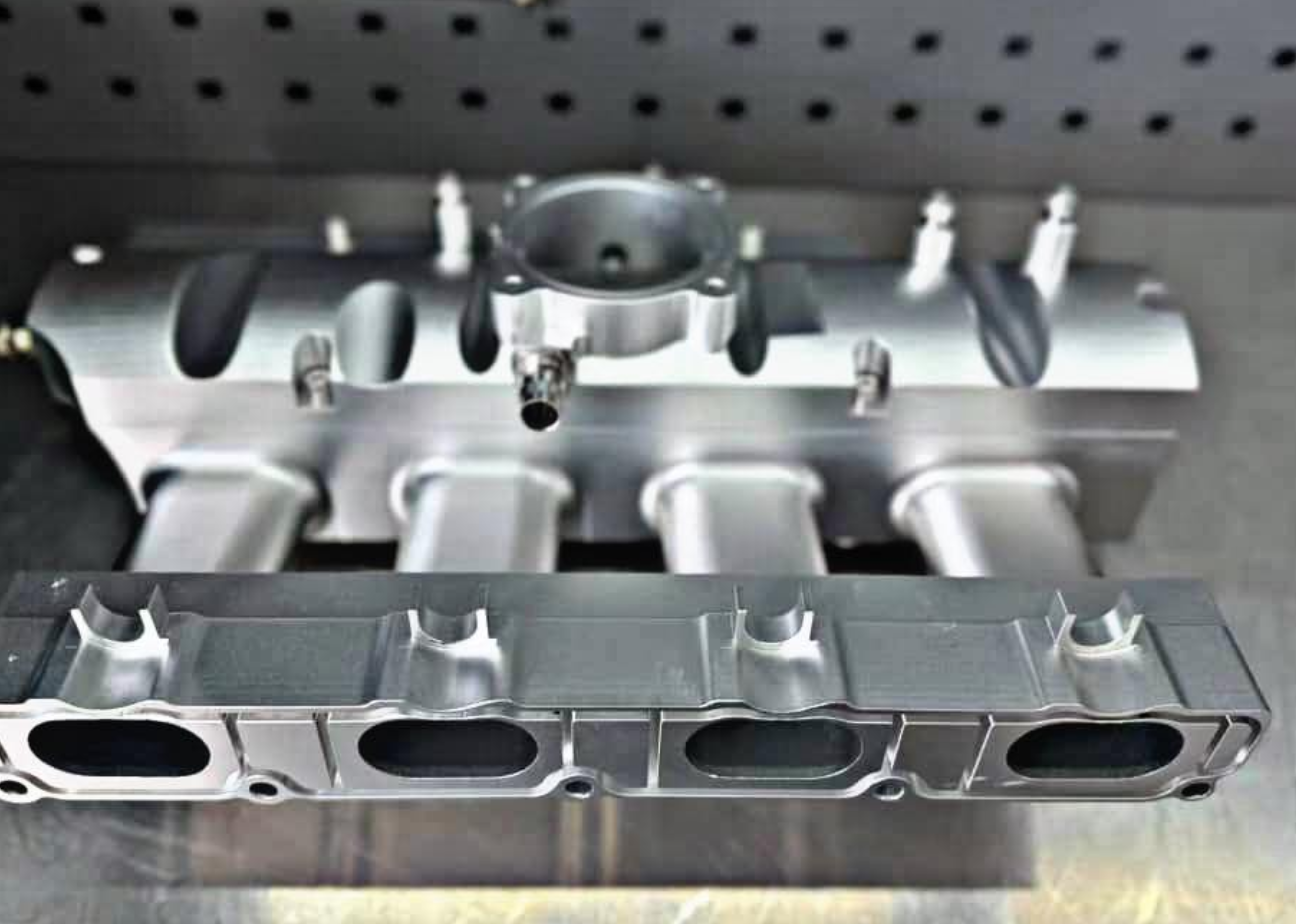
Executive Summary: Industry Approaches to CNC Machining Intake Manifolds
Manufacturers of intake manifolds emphasize:
-
The importance of precise CNC precision Machining cavities to optimize engine airflow.
-
Material selection—aluminum, steel, and high-performance plastics.
-
Surface finish impact on airflow and sealing.
-
Integration of CNC Milled parts and CNC Turned parts for complex geometries.
-
Process control, tool path strategies, and thermal management.
CNCRUSH applies these principles to deliver high-precision CNC precision machining service globally, ensuring repeatable performance for automotive and industrial applications.
1. CNC Machining Cavity Precision for Intake Manifolds and Its Impact on Engine Performance
The cavity shape determines airflow uniformity and volumetric efficiency. Inaccurate CNC precision Machining can create negative effects such as:
-
Flow turbulence
-
Uneven air-fuel mixture
-
Reduced power output
CNCRUSH leverages CNC Milled parts to craft complex cavity geometries with micron-level tolerances, and CNC Turned parts to ensure rotational symmetry where required.
2. CNC Machining Service Material Selection for Intake Manifold Cavities
Intake manifolds are made from:
-
Aluminum alloys for lightweight applications
-
Cast iron for durability
-
High-performance plastics for thermal resistance
Each material demands specialized CNC Machining parameters. Aluminum requires careful heat control, plastics need low-force cutting, and cast iron benefits from tool coatings to reduce wear. CNCRUSH’s 12 years of experience ensures the right CNC Milled parts and CNC Turned parts processes for every material.
3. CNC Machining and CNC Milled Parts for Complex Flow Paths
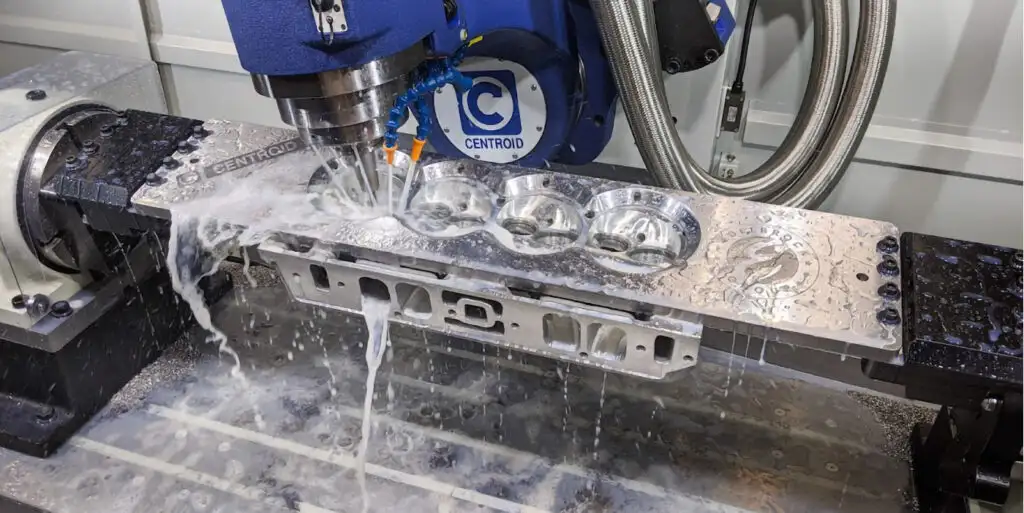
Complex intake manifold paths are impossible without CNC Milled parts. Positive outcomes include:
-
Smooth internal surfaces
-
Optimized airflow paths
-
Reduced pressure drop
Proper CNC precision Machining ensures these paths maintain design intent and functional performance in automotive and automotion applications.
4. CNC Machining and CNC Turned Parts for Rotational Components
Certain intake components, such as throttle body housings or inserts, require CNC Turned parts. Benefits include:
-
Concentricity
-
Roundness accuracy
-
Seal compatibility
Negative outcomes from poor CNC precision Machining include leaks, vibration, and airflow loss.
5. Tooling Strategies in CNC Machining Service for Intake Manifold Cavities
Cutting tool selection determines process success. CNCRUSH focuses on:
-
High-rigidity end mills
-
Coated inserts for heat resistance
-
Multi-axis tool paths
This tooling strategy reduces errors, improves consistency, and maintains positive performance across batches.
6. CNC Machining Process Optimization for Automotive and Automotion Applications
Automotive and automotion applications require high repeatability. CNCRUSH optimizes CNC precision Machining by:
-
Defining precise tool paths
-
Monitoring spindle loads
-
Adjusting feed rates per material
This approach ensures CNC Milled parts and CNC Turned parts maintain dimensional stability under high-volume production.
7. Surface Finish and Heat Management in CNC Machining
Surface quality directly affects airflow and sealing. Rough or poorly machined cavities create negative friction effects, reducing engine efficiency. CNCRUSH applies optimized cutting parameters and coolant strategies to maintain high-quality surface finishes in both CNC Milled parts and CNC Turned parts.
8. Quality Control and Monitoring in CNC Machining Service

Effective CNC Machining includes robust inspection:
-
In-process probing
-
Coordinate measuring machines (CMM)
-
Optical inspection for cavity depth and shape
This ensures intake manifold cavities meet specifications and deliver reliable performance.
9. CNC Machining Cost vs. Performance Analysis
High-precision CNC Machining can be perceived as costly, but improper machining leads to scrap and engine inefficiency—a negative consequence. CNCRUSH balances:
-
Tool life
-
Material utilization
-
Process stability
Resulting in CNC Milled parts and CNC Turned parts that meet performance expectations without unnecessary cost.
10. Why Choose CNCRUSH as Your CNC Machining Service Provider
CNCRUSH provides:
-
12 years of CNC machining service expertise
-
Precision CNC Milled parts and CNC Turned parts
-
Serving automotive, machine building and automotion clients worldwide
-
Reliable, repeatable, and scalable solutions
We combine engineering know-how with advanced CNC precision Machining processes to ensure every intake manifold meets exacting standards.
Comparative Table 1: CNC Machining Parameters for Intake Manifold Materials
| Material | CNC Machining Strategy | Tool Type | Surface Finish | Critical Consideration |
|---|---|---|---|---|
| Aluminum | High-speed milling | Carbide end mills | 0.8–1.2 μm | Thermal expansion |
| Cast Iron | Low-speed milling | Coated inserts | 1.0–1.5 μm | Tool wear |
| Plastic | Low-force milling | High-feed cutters | 0.5–1.0 μm | Chip evacuation |
Comparative Table 2: CNC Milled Parts vs CNC Turned Parts for Intake Manifolds
| Feature | CNC Milled Parts | CNC Turned Parts |
|---|---|---|
| Geometry | Complex cavities | Cylindrical components |
| Tolerance | ±0.01 mm | ±0.005 mm |
| Surface | Smooth flow paths | Concentric, round features |
| Application | Intake runners, flanges | Throttle bodies, inserts |
FAQ: CNC Machining Intake Manifolds
Q1: Why is CNC precision Machining critical for intake manifold cavities?
It ensures airflow efficiency, dimensional accuracy, and long-term reliability.
Q2: Can CNC Milled parts and CNC Turned parts be combined?
Yes, for optimal performance in complex intake geometries.
Q3: How does material selection affect CNC Machining?
Each material demands different tool types, feeds, and speeds to prevent wear or thermal distortion.
Q4: Can CNCRUSH handle both automotive and machine building projects?
Absolutely. Our CNC precision machining service serves automotive, machine building and automotion clients globally.
Q5: Why choose CNCRUSH for CNC Machining of intake manifolds?
Because we combine 12 years of experience, advanced CNC Milled parts and CNC Turned parts capabilities, and consistent quality assurance.
Conclusion: CNC Machining as a Strategic Advantage
Precision CNC Machining is the cornerstone of performance, durability, and efficiency in intake manifolds. By combining CNC Milled parts and CNC Turned parts expertise, CNCRUSH delivers reliable, high-quality solutions for automotive, machine building and automotion industries. For over 12 years, our CNC machining service has helped clients achieve positive results in engine performance and component longevity.
