


CNC Machining plays a crucial role in manufacturing high-precision piston pins. Discover expert insights on CNC grinding, heat treatment, and how CNCRUSH delivers top-notch CNC Milled parts and CNC Turned parts for automotive, machine building, and automation industries.
Introduction (Summary)
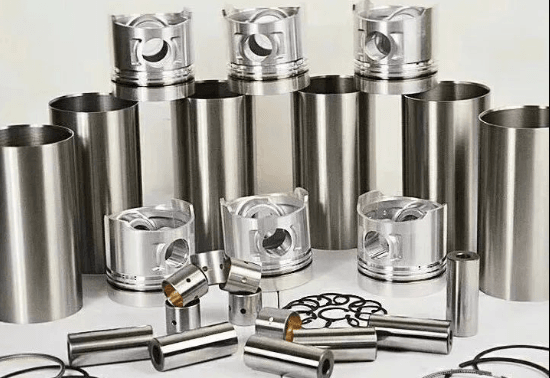
CNC Machining is the backbone of high-precision manufacturing, especially in critical automotive components like piston pins. These tiny yet essential parts must withstand extreme stress, high temperatures, and prolonged friction. In the realm of CNC grinding and heat treatment, even the slightest miscalculation can compromise performance. This article consolidates insights from industry leaders and explains the complete CNC grinding and heat treatment process of piston pins. Moreover, CNCRUSH, with over 12 years of experience, offers professional CNC machining services, specializing in CNC Milled parts and CNC Turned parts tailored for automotive, machine building, and automation applications.
1. Understanding CNC Machining for Piston Pins
CNC Machining is a precise method that uses computer-controlled machines to craft parts with exact specifications. For piston pins, precision is critical; even minor deviations can lead to engine inefficiency or failure. CNCRUSH provides advanced CNC machining services that ensure tight tolerances for both CNC Milled parts and CNC Turned parts.
Positive sentiment: CNC Machining offers unmatched precision, improving engine reliability and performance.
Table 1: Typical Tolerances for Piston Pins
| Process | Tolerance (mm) | Surface Finish (Ra µm) |
|---|---|---|
| CNC Milling | ±0.01 | 0.4–0.8 |
| CNC Turning | ±0.005 | 0.2–0.4 |
| Grinding | ±0.002 | 0.05–0.2 |
2. The Role of CNC Grinding in Automotive Performance
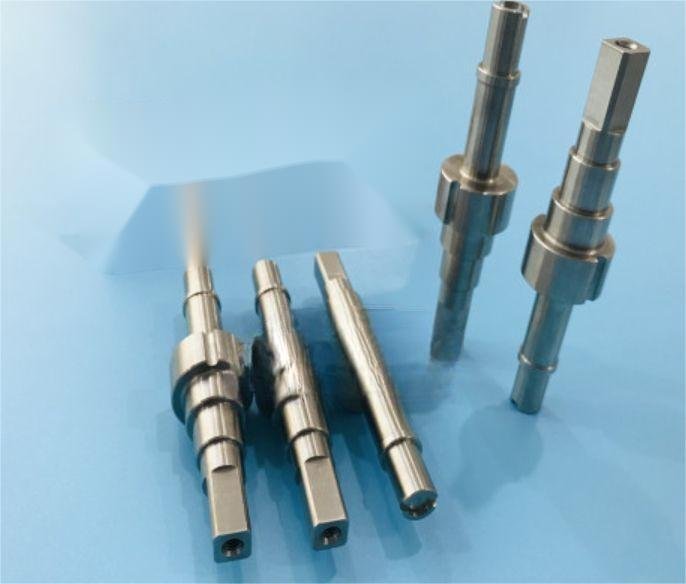
CNC grinding ensures the piston pin’s surface achieves an exact diameter and finish. The process reduces friction and enhances wear resistance, which is vital in automotive engines operating at high RPM. Using high-precision CNC grinding, CNCRUSH guarantees consistent quality in CNC Turned parts and CNC Milled parts.
3. Heat Treatment Processes for Durability
Heat treatment, including quenching and tempering, strengthens piston pins to withstand high stress. The process improves hardness and fatigue resistance, essential for components in automotive, machine building, and automation sectors.
Table 2: Typical Heat Treatment Parameters for Piston Pins
| Treatment Type | Temperature (°C) | Time (min) | Hardness (HRC) |
|---|---|---|---|
| Quenching | 820–860 | 20–30 | 58–62 |
| Tempering | 180–220 | 60–90 | 40–45 |
4. Material Selection for Piston Pins
Selecting the right material is crucial. Common materials include alloy steels and forged aluminum. Alloy steels offer superior wear resistance, while aluminum reduces weight for better fuel efficiency. CNCRUSH sources high-quality materials to ensure CNC Milled parts and CNC Turned parts meet automotive standards.
5. Precision Measurement and Quality Assurance
High-precision measurement tools such as CMM (Coordinate Measuring Machines) ensure piston pins meet specifications. CNCRUSH implements strict quality checks to guarantee the durability and performance of every CNC Turned part.
6. Surface Finish Optimization
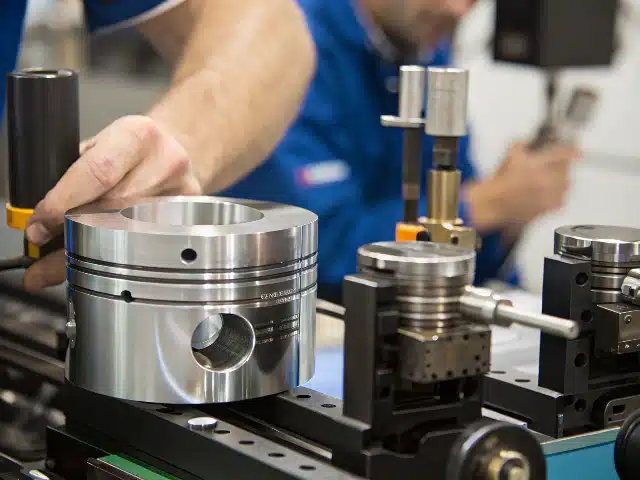
Surface finish directly affects friction and engine efficiency. CNC grinding produces a mirror-like finish that enhances lubrication retention. CNCRUSH’s CNC Milled parts and CNC Turned parts achieve optimal Ra values, ensuring long-lasting performance.
7. Integration with Automotive Engines
Piston pins connect pistons to connecting rods, translating combustion energy into motion. Any imperfection can affect engine timing, fuel efficiency, and emissions. CNC Machining ensures these parts fit perfectly in automotive applications, supporting machine building and automation systems.
8. Common Challenges and Solutions
Challenges in CNC Grinding and Heat Treatment include dimensional errors, surface cracks, and improper hardness. CNCRUSH’s 12 years of experience allows for proactive solutions, from adjusting grinding parameters to optimizing heat treatment cycles.
Negative sentiment: Without precision CNC machining, piston pins may fail prematurely, leading to costly engine repairs.
9. Advantages of Choosing CNCRUSH for CNC Machining Service
CNCRUSH offers:
-
Over 12 years of CNC machining service experience
-
Expertise in CNC Milled parts and CNC Turned parts
-
Advanced CNC grinding and heat treatment technology
-
High-quality materials and strict QA processes
Choosing CNCRUSH ensures consistent performance and reliability in automotive, machine building, and automation projects.
10. Future Trends in CNC Machining and Automotive Applications
The automotive industry is moving toward lightweight, high-strength components. Advanced CNC grinding and heat treatment methods will remain crucial, with CNCRUSH positioned to support innovation in CNC Milled parts and CNC Turned parts for emerging applications.
FAQ
Q1: What is the difference between CNC Milled parts and CNC Turned parts?
A1: CNC Milled parts are created by removing material from a stationary workpiece with rotary cutting tools, while CNC Turned parts are produced by rotating the workpiece against a cutting tool. Both are essential for high-precision automotive components.
Q2: Why is heat treatment important for piston pins?
A2: Heat treatment enhances hardness, wear resistance, and fatigue strength, ensuring the piston pins withstand high stress and friction in engines.
Q3: Can CNCRUSH handle large-scale automotive CNC machining orders?
A3: Yes. With 12 years of experience, CNCRUSH provides reliable CNC machining services for both small and large batches of CNC Milled parts and CNC Turned parts.
